Molten Trail
- Drops lava based on distance, not time
- Stops kiting routes staying safe forever
- Drops lava faster during the enrage phase

A first-mission final exam where the boss keeps covering the arena in lava, and the best way to earn a melee opening is to bait his charge.
Test everything the player learned in the first mission: shooting, dodging, traversal, finding health and having the nerve to bait the boss into a close-range opening.
The Molten Tyrant closes Zero Protocol's prologue. By this point, the player has learned to attack, dodge, block, use a pistol and grenade, and move through the level by jumping, mantling and wallrunning. The fight asks them to use all of it without adding a brand-new rule at the finish line.
The Tyrant is an area-denial boss. Every move and special attack leaves lava behind, so the floor tells the story of the fight. The player starts with loads of room. As the fight goes on, that room disappears. You're not memorising a fixed attack order; you're looking at the floor and working out where you'll still be safe a few seconds later.
All of the Tyrant's abilities use one shared Lava Surface Manager. A puddle lasts about 30 seconds, deals steady damage without stagger or stacking, and can hurt ordinary enemies as well as the player. The arena caps at 40 puddles. When it hits the cap, the oldest cooled puddle disappears, which keeps the hazard predictable and stops the surface count growing forever.
The 30-second lifetime stays fixed. I tune each phase by changing how quickly the boss adds new lava. More lava means more pressure, without making each puddle hit harder for no clear reason. The player can see the same rule working through the whole fight.
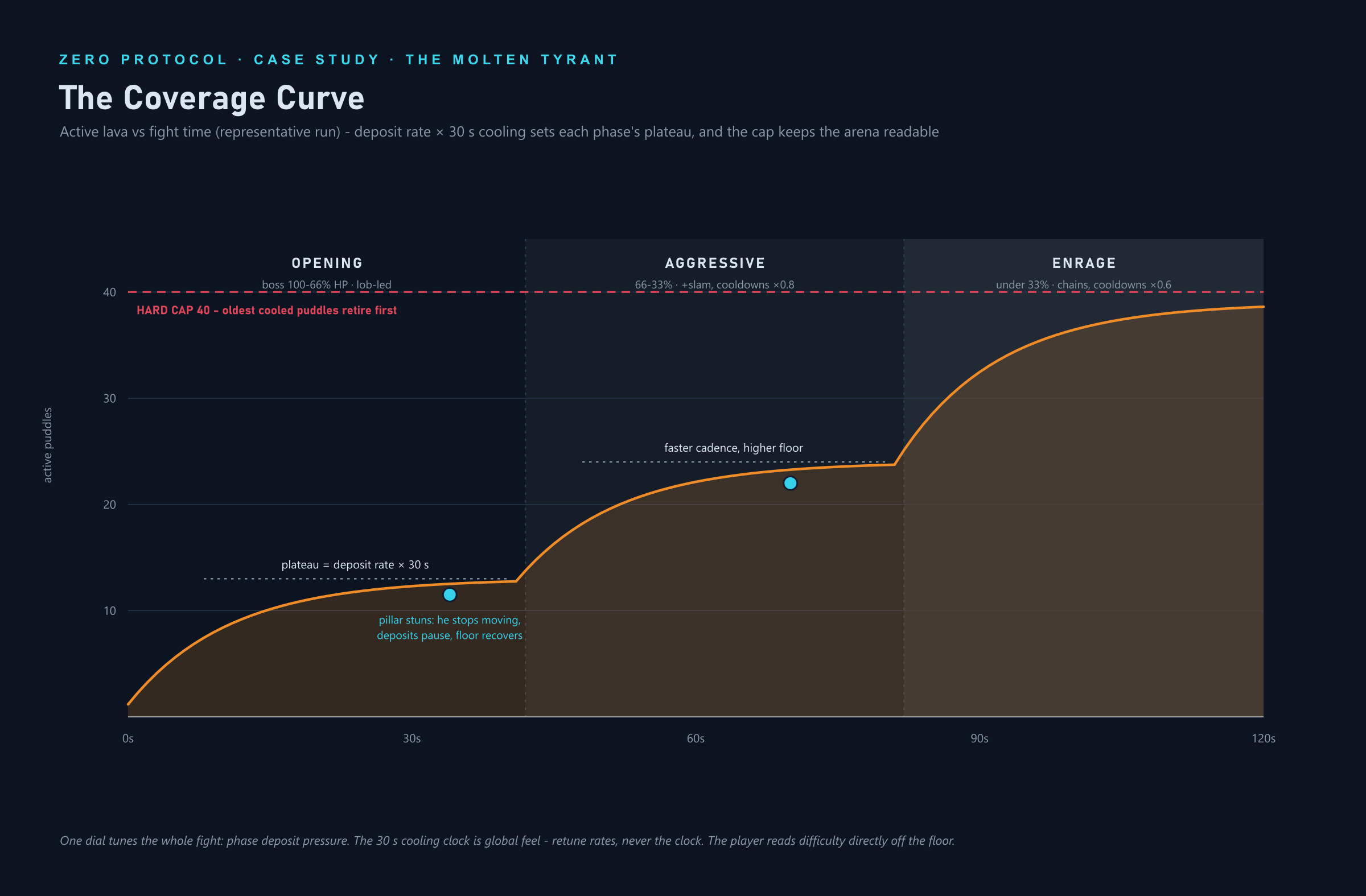
Each ability changes the floor in a different shape and asks for a different response. The boss never uses the same special twice in a row, so the player reads intent instead of waiting out a repeated pattern.
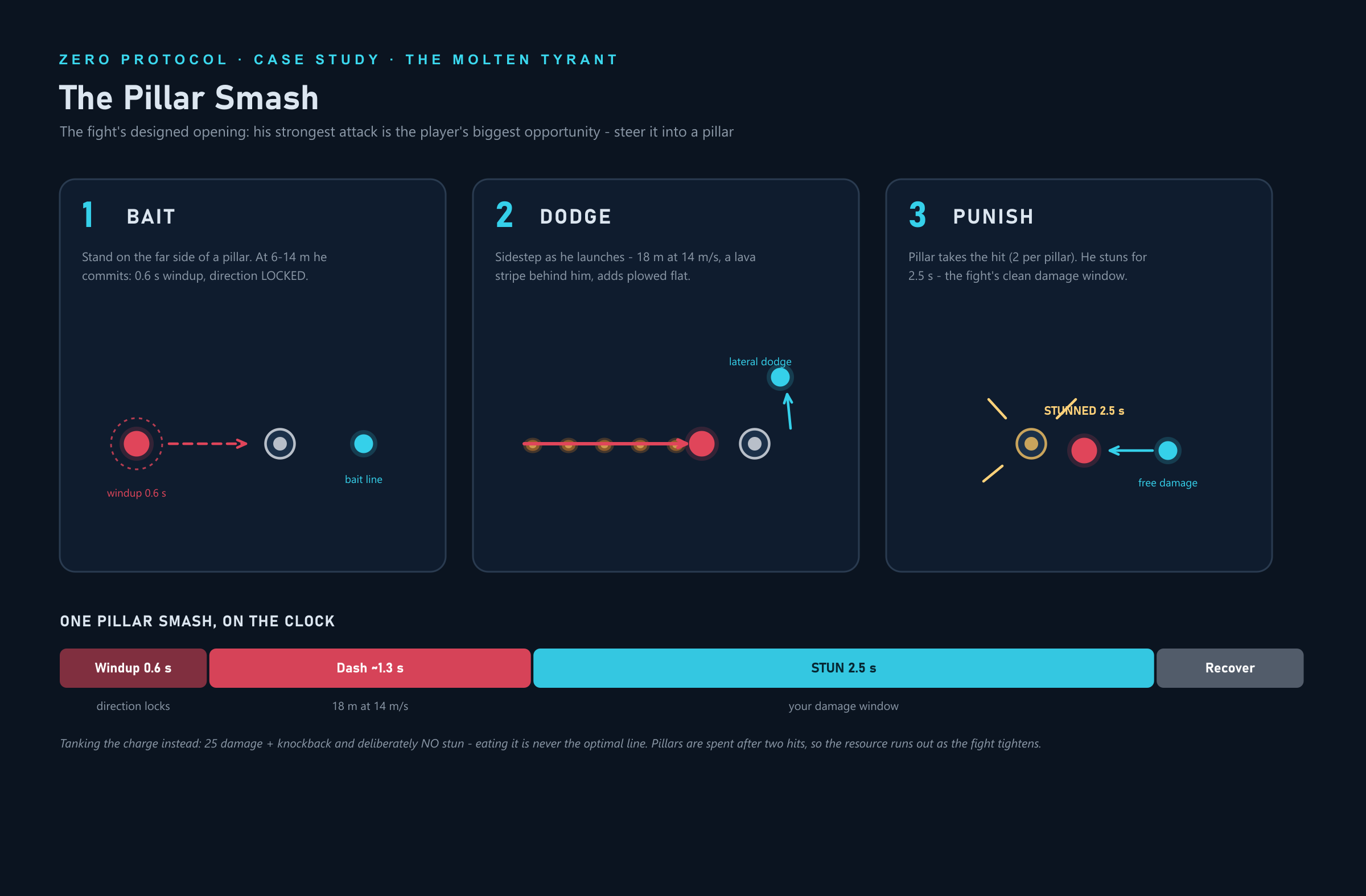
Pistol and grenade attacks are the safe way to damage the Tyrant while lava surrounds him. Melee only really opens up when the player creates the chance. Three or four breakable pillars sit around the arena, and only Magma Rush can destroy them. Bait the charge into one and the Tyrant is stunned for 2.5 seconds, giving the player a clean chance to get in close.
The charge direction locks during the windup. Once the player commits to the bait, the game keeps its side of the deal. A pillar isn't a scripted phase gate. It's something the player can choose to spend when they want a clean damage window.
When the floor gets crowded, the arena's traversal routes become part of the fight. Jumping, mantling and wallrunning let the player cross lava or get out of a corner. The lava still matters; traversal just gives the player a way through it and back into the fight.
Ghouls wander into the arena throughout the fight. They'll attack the player, but they also burn in lava or get turned into mist if they cross Magma Rush. Their chance to drop health makes them both a threat and a way to stay alive. The orb might land across a dangerous patch, so the player still has to work out whether it's worth going for.
If Jimmy survived the stage, he cheers Ryker on from a safe position and slowly heals him. It's a reward for keeping Jimmy alive earlier, but he isn't required and he can't solve the fight.
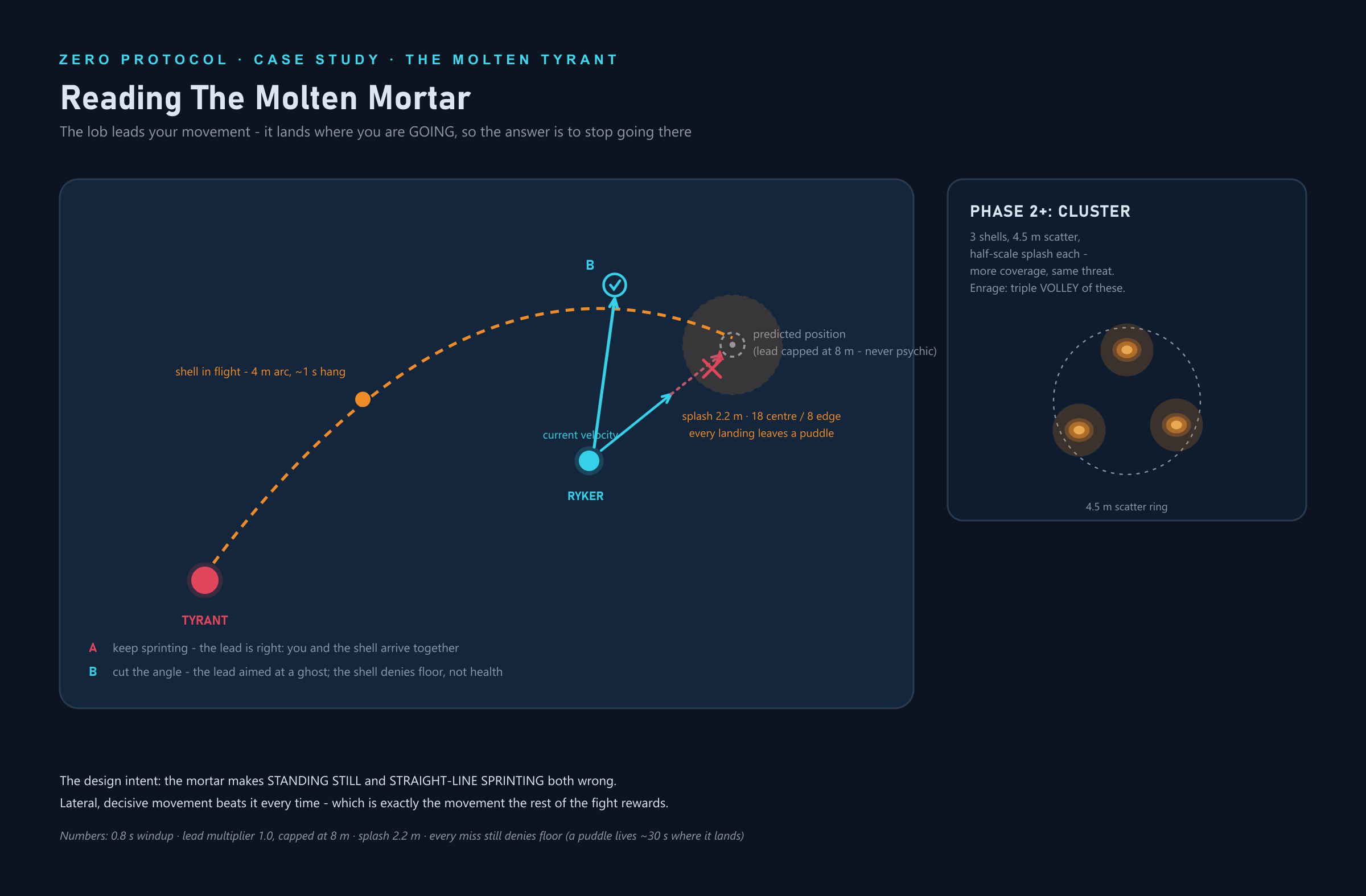
The opening phase teaches charge and mortar. The second adds Ground Slam and shortens the cooldowns. The enrage phase makes the Tyrant faster and more dangerous, adds lava more quickly, and turns charge and mortar into double and clustered versions. A short pause between phases gives the player a moment to see that the pace has changed.
The timings and ability choices live in Boss Profile and Boss Phase Data resources, so I can tune them in the Inspector instead of burying them in code. Each ability has a stable ID, the editor warns me if a phase is missing something, and the boss test room can jump straight to any phase. I can use the same setup for later bosses without rebuilding the shared phase and ability logic every time.
The fight works because everything points at the same problem. Lava makes space valuable. The attacks change that space in clear shapes. Traversal helps you escape. Pillars turn a dangerous charge into a chance to hit back. Ghouls are both a threat and a risky source of health. If Jimmy survived, that earlier choice still helps. The question is always the same: where can I safely go next, and what can I get by going there?
I can take a feature from the first idea through building, testing and tuning it.